
Heating, not cooling
In the Caribbean the energy story is air conditioning. In most of Canada it is heating, cold-weather peaks and a load curve that swings through the year. That is a harder and more interesting problem for students to take apart.
Before Canada, there was Trinidad and Tobago. In June 2026 the Carbon Zero Institute of Trinidad and Tobago ran the first AI Energy Hackathon, and it worked. The Canadian programme takes that model and adapts it to Canadian schools, Canadian energy data and a Canadian winter.
It did not start on the day. It followed a month of educational training sessions delivered by CZITT, so students walked in already knowing how to read electricity data and put an AI tool to work. On the day, teams tackled real energy challenges with mentors alongside them.
Fourteen mentorship sessions ran ahead of the event, covering AI and coding fundamentals, electricity fundamentals, energy and climate change, data analysis, women in climate leadership, youth climate action, and two full practice runs on real school electricity data. The brief was deliberately practical: look at how your own school uses electricity, then make an evidence-backed recommendation to the people who run it.
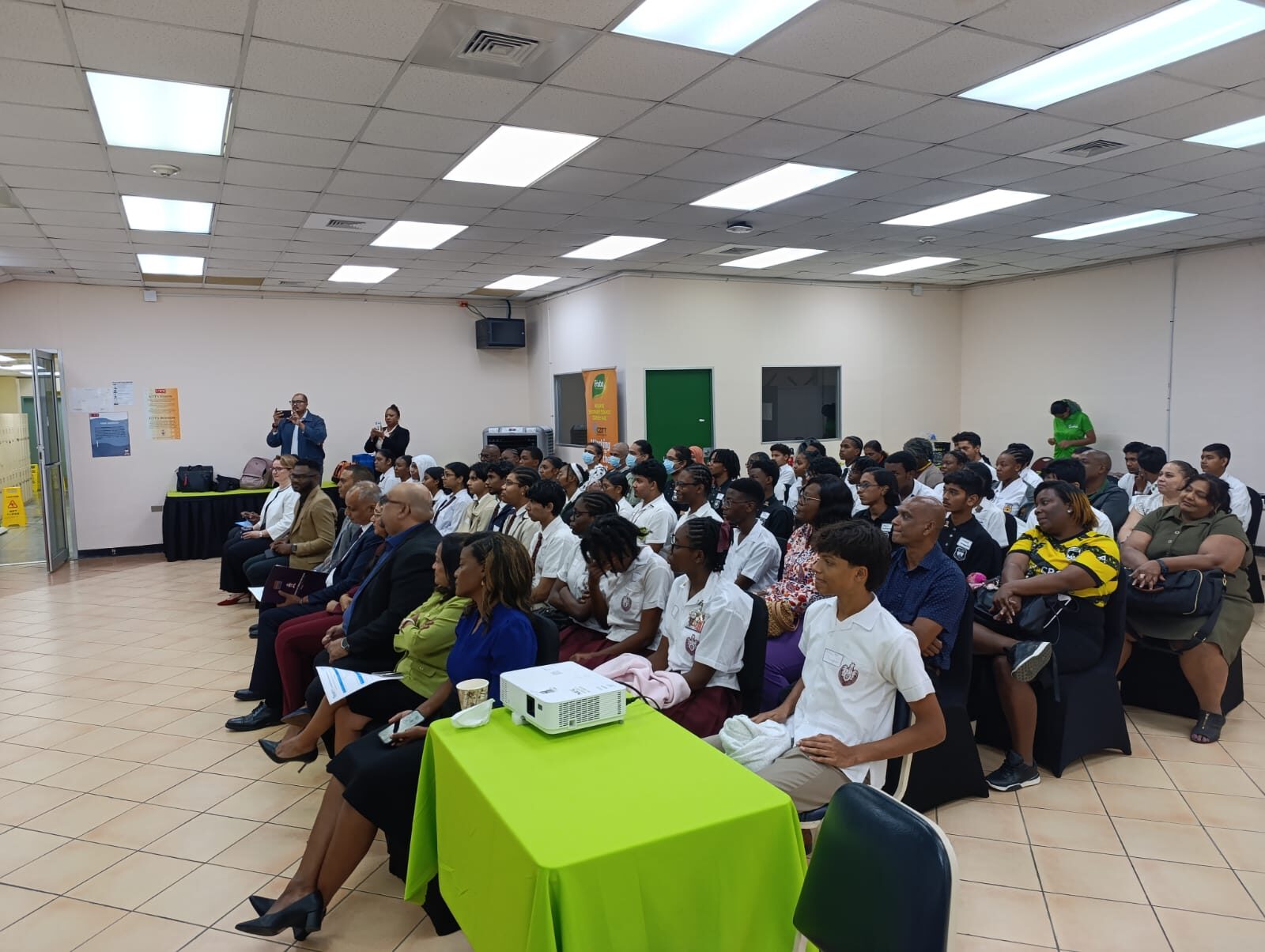
From the first AI Energy Hackathon on 12 June 2026, and the training that led up to it.
A short recap of the first hackathon.
Short highlight reel from the first AI Energy Hackathon.
The teach-first structure carries over unchanged. The data, the buildings and the questions do not.
In the Caribbean the energy story is air conditioning. In most of Canada it is heating, cold-weather peaks and a load curve that swings through the year. That is a harder and more interesting problem for students to take apart.
Green Button gives a Canadian school a right to its own electricity and gas data in a usable form. Students can work with their real building rather than a sample file, and compare it against real weather.
Canada’s electricity grid is required to reach net zero by 2035 under the Clean Electricity Regulations. Students are not learning about a distant scenario. They are looking at the system they will be working in.
The Hackathon is an excellent example of what can be achieved when institutions work together to empower our youth and address national priorities.
Professor Rean Maharaj, Acting President, The University of Trinidad and Tobago
UTT press release, 12 June 2026 ↗
The order matters. A hackathon on its own rewards the students who already knew. Training first means the day rewards preparation instead.
A month of training sessions on energy, climate, data and AI, open to students with no technical background.
The AI Energy Hackathon, where teams use their own school’s real energy data to make an evidence-backed case to the people who run it.
University-level innovation challenges, co-op placements and the energy workforce Canada needs to staff a net-zero grid by 2035.
Everything on this page happened because organisations chose to back it. The Canadian programme is being built now, which means there is still room to shape it.